Free toolkit
Prove the business impact of your capability programme
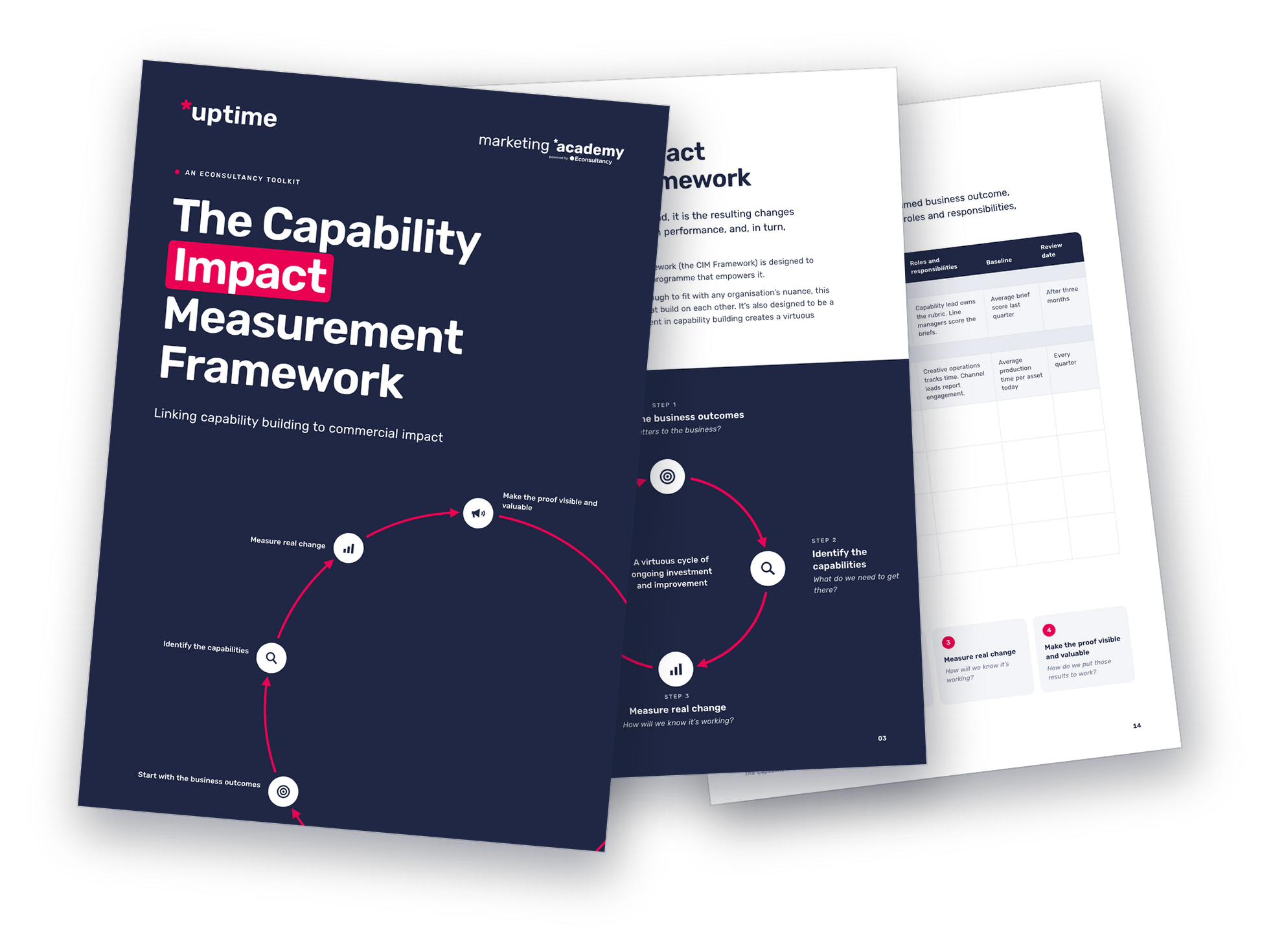
The Capability Impact Measurement Framework is Econsultancy’s four-step method for linking skills investment to behaviour change, team performance and business results. It was built with capability leaders from Canon, HSBC, PlayStation, easyJet and William Grant & Sons.
- Four steps, each with key actions and a case study
- A measurement-plan worksheet with two completed examples
- A guide to winning budget before you have the data
Shaped at Econsultancy’s Capability Leader Forum with capability leaders from


What is inside the 15 pages
Four step chapters, a before-launch checklist, a measurement ladder, a worksheet with two completed examples, and a companion page on making the case before you have the data.

Step chapters
Each step has the question it answers, key actions and a case study from a capability leader.

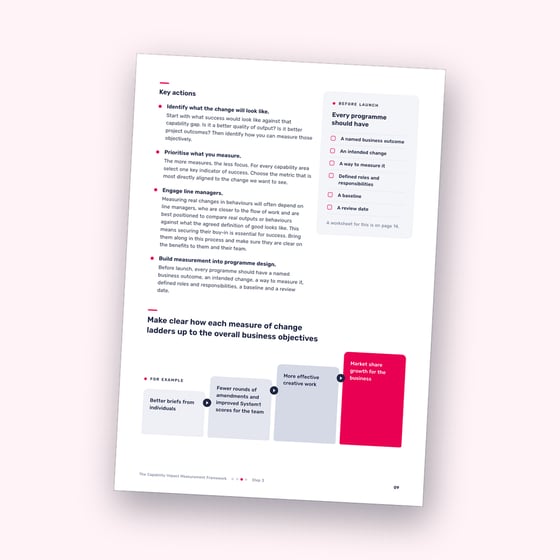
The before-launch checklist and measurement ladder
Six things to agree before any programme starts, and a ladder that links each measure to a business objective.

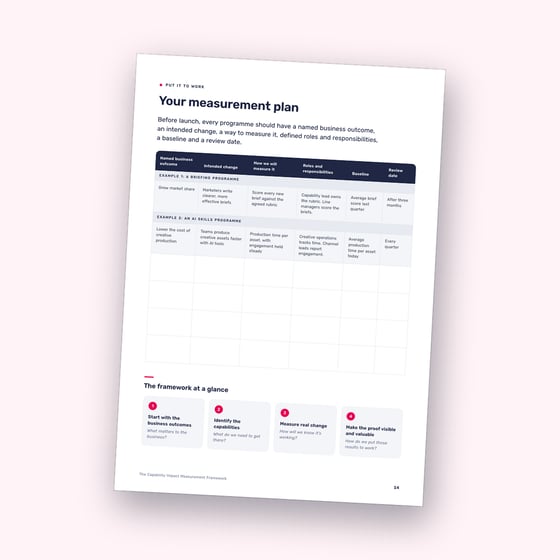
The measurement-plan worksheet
One row per programme: outcome, intended change, indicator, owners, baseline and review date. Two completed examples included.
Capability budgets now have to show a return
The skills gap is measurable
In March 2026 Ipsos, with Mark Ritson, tested over 1,000 marketers on marketing fundamentals. Only 9% of untrained marketers passed.
Completions do not convince finance
Completion rates and satisfaction scores do not tell senior leadership what changed. The framework measures behaviour, performance and business outcomes instead.
Evidence protects the budget
With a baseline and a review date agreed before launch, you can show what to continue, scale or stop when budgets are set.
Four steps, from business outcome to visible proof
Each step answers one question and comes with key actions and a case study. The steps run as a cycle, so the proof from one programme makes the case for the next.
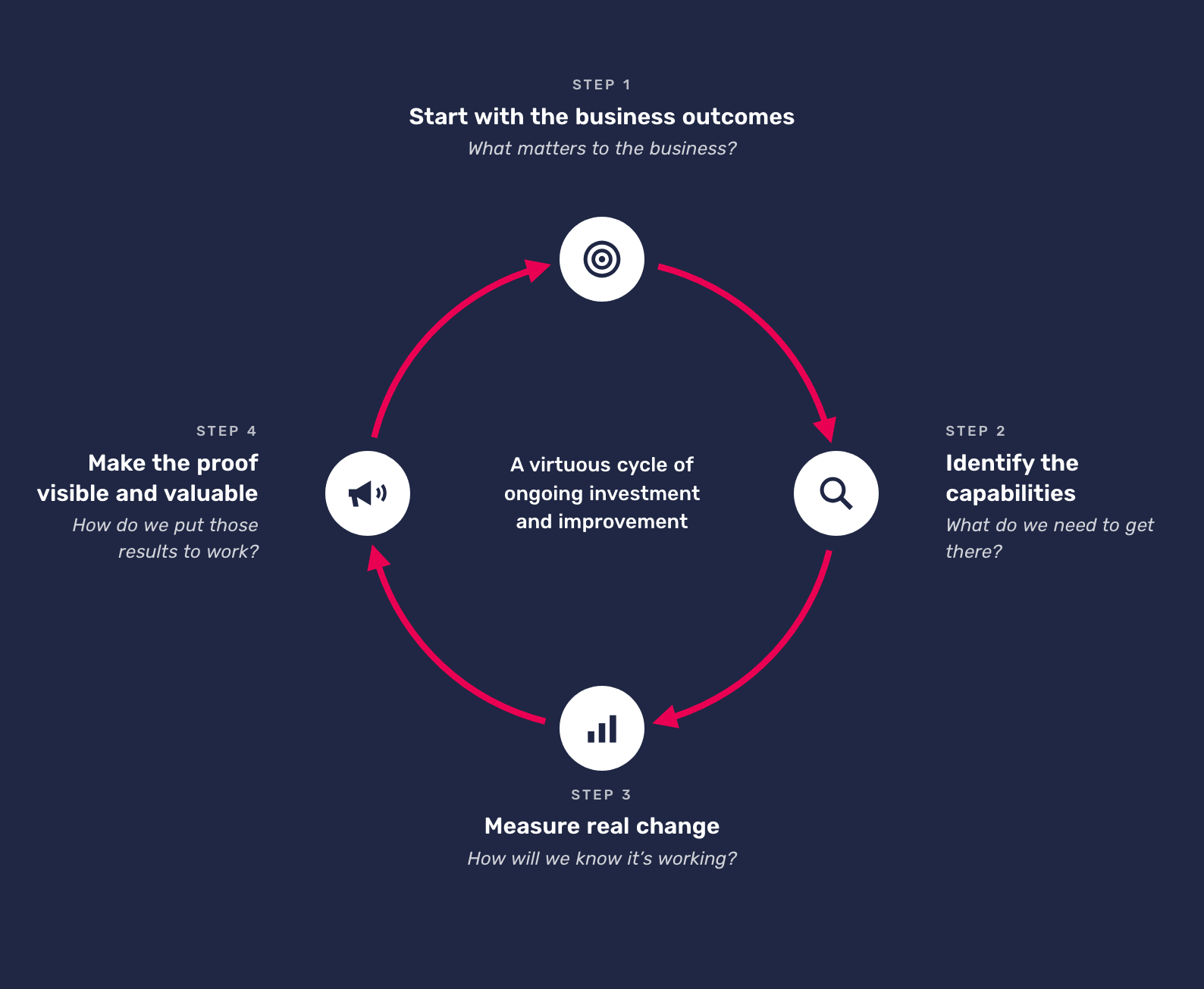
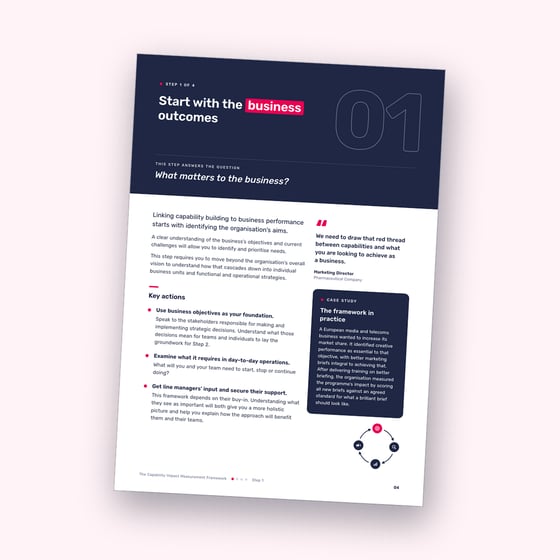
Start with the business outcomes
What matters to the business? Agree the priorities your programme must support.
Identify the capabilities
What do we need to get there? Map the skills, knowledge and behaviours behind those priorities.
Measure real change
How will we know it is working? Pick one indicator per capability, set a baseline and agree what good looks like.
Make the proof visible and valuable
How do we put the results to work? Report to leadership, the organisation and your own team, then decide what to continue, adapt, scale or stop.
Who it is for
- Capability and academy leads who have to report on programme impact
- Marketing directors and CMOs who sponsor team development
- HR and people partners supporting a functional capability programme
Written with marketing teams first. The four steps work for any function.
“Without a clear link between investment in skills and business outcomes, capability building programmes risk being seen as a nice-to-have rather than the driver of growth and resilience we at Econsultancy know them to be.”

Questions before you download
Is it free?
Yes. The framework has been developed alongside with capability leaders and is completely free to use.
How long does it take to read?
It is 15 pages, about 20 minutes. Filling in the worksheet with your team takes longer.
Is it only for marketing teams?
No. It was built with marketing capability leaders, and every step applies to other functions.
What if we have no data yet?
Page 5 covers making the case before you have results, including three tactics for securing budget.
Who wrote it?
Econsultancy, drawing on a working session with senior capability leaders in September 2026.
Can we get help applying it?
Yes. Econsultancy consultants work with teams on capability measurement. Book a consultation.